Not every "non-toxic" label on a baby toy means the same thing, and in 2026 the safest picks are the ones with a traceable material list, not just a green leaf on the packaging.
- Green Toys is the best overall pick for non toxic toys for infants in 2026 — recycled plastic, no BPA, dishwasher-safe.
- Hevea's natural rubber teethers beat plastic ones for babies actively teething under 12 months.
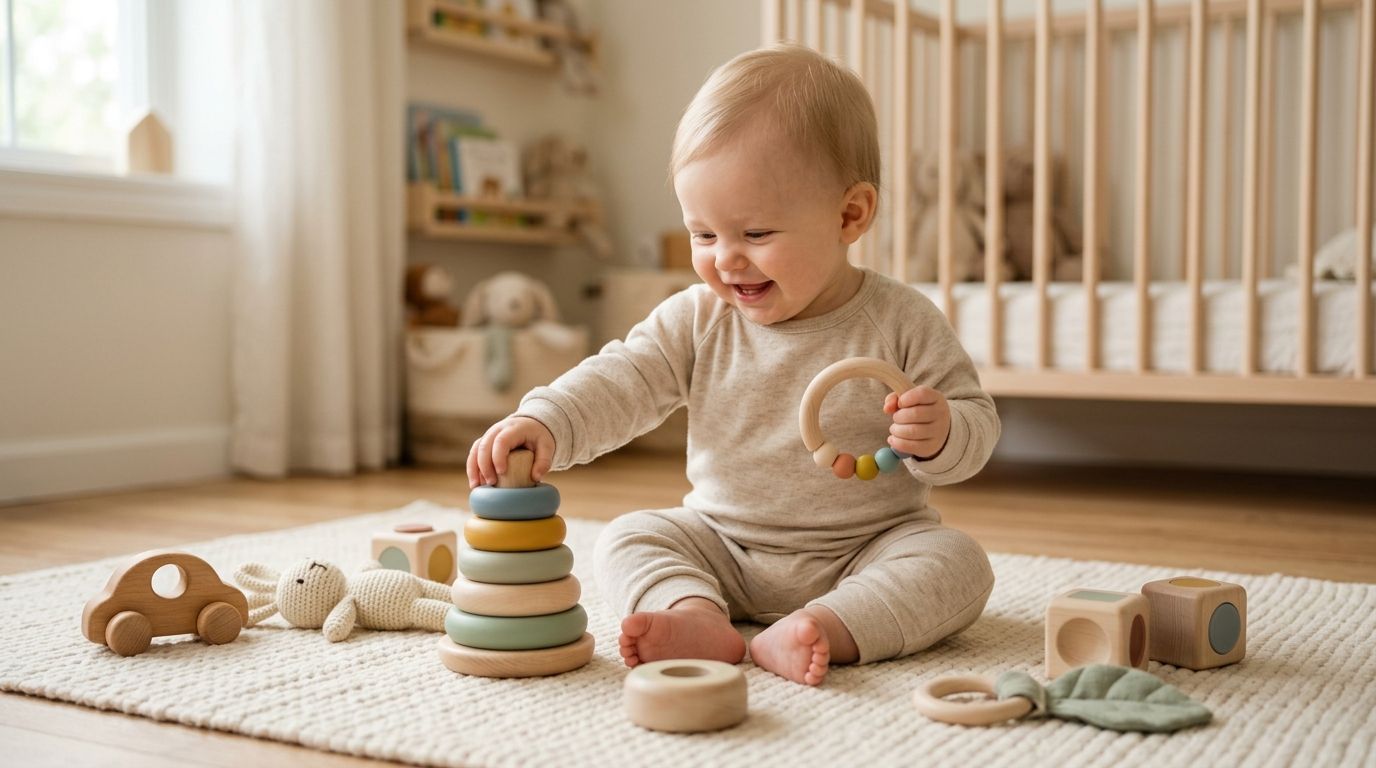
- PlanToys uses rubberwood and water-based dyes instead of formaldehyde-sealed lacquer common in cheaper wooden sets.
- Bumkins silicone toys are the budget-friendly non-toxic option for daily chew and bath play.
- LIV & Company's Pretty Girl board book adds a gentle first sensory toy to a nursery shelf.
Why this matters
A baby's mouth is their main way of exploring an object, which means every toy that ends up in a crib or diaper bag is effectively a food-contact item. Lead, phthalates, and PVC stabilizers show up more often in imported plastic toys than shoppers expect, and labeling laws don't always catch every product before it reaches a shelf.
LIV & Company's curated collection of non-toxic baby and family gear exists because parents shouldn't have to cross-reference three certification databases before buying a rattle. This guide ranks six non-toxic baby toy options against the same five criteria, so the comparison holds up whether you're buying for a newborn registry or a toddler who's outgrown their first set.
If a toy doesn't list what it's made from, put it back on the shelf.
“If a toy doesn't list what it's made from, put it back on the shelf.”
What makes the best non-toxic baby toys
- Material transparency — the brand states the exact plastic, wood, or rubber source, not just "eco-friendly"
- Certification — compliance with CPSIA lead and phthalate limits (100 ppm lead, 0.1% phthalates) and ASTM F963 mechanical safety
- Sourcing — renewable or recycled material with a traceable supply chain
- Durability and washability — survives repeated mouthing, drops, and dishwasher or wipe-down cleaning
- Sensory and developmental value — the toy actually does something for the age range it targets
- Packaging — minimal single-use plastic wrap, since a non-toxic toy shipped in shrink-wrap is only half the job
Non-toxic baby toys at a glance
| Toy | Best for | Standout feature | Key limitation |
|---|---|---|---|
| Green Toys | Everyday play, 6+ months | Recycled #2 HDPE plastic, dishwasher-safe | Not sized for tiny newborn hands |
| Hevea | Active teething | 100% natural rubber, biodegradable | Distinct rubber smell some babies dislike at first |
| PlanToys | Wooden building and stacking toys | Rubberwood with water-based dyes, no formaldehyde | Too firm and heavy for very young infants |
| Bumkins | Budget-friendly daily chew/bath toy | Food-grade silicone, BPA/phthalate/PVC-free | Fewer developmental variations than wood or plastic sets |
| LIV & Company Pretty Girl board book | First sensory book | Sturdy board pages built for tiny hands | Not a chew-safe teething toy |
| LIV & Company Baby Book and Keepsake Box | Milestone keepsake and sensory box | Doubles as a display piece and a tactile item | Not built for daily rough play |
1. Green Toys: best non-toxic baby toy for everyday play
Green Toys makes its entire lineup from recycled plastic milk jugs (#2 HDPE), skipping BPA, phthalates, and PVC across the board. The toys are dishwasher-safe, which matters more than most parents realize once a rattle has been on the floor of three different rooms in one afternoon.
Green Toys pros:
- Recycled, US-manufactured plastic with a documented supply chain
- Dishwasher-safe for actual daily sanitizing, not just a wipe-down
- No BPA, phthalates, or PVC in any product line
- Wide range from teethers to stacking cups to ride-on toys
Green Toys cons:
- Bright, saturated colors and firm plastic aren't ideal for a newborn's grip
- Best suited to 6 months and up, not day-one infants
- Limited soft or plush options for babies who prefer texture over shape
Green Toys verdict: Buy. This is the default non-toxic pick for a baby who's past the newborn stage and mouthing everything in reach.
2. Hevea: best non-toxic toy for teething
Hevea builds its teethers and pacifiers from natural rubber tapped from rubber trees, then finishes them with food-grade paint instead of synthetic coatings. The material is biodegradable, which is unusual in a toy category dominated by plastic.
Hevea pros:
- 100% natural rubber, no synthetic fillers
- Biodegradable material, unlike most plastic teethers
- Food-grade finish designed specifically for mouthing
Hevea cons:
- Natural rubber has a distinct smell some infants reject at first use
- Fewer shape and color options than a plastic multi-pack
Hevea verdict: Buy for the teething window, roughly 4 to 12 months, when a baby needs something firm and safe to gnaw on constantly.
3. PlanToys: best non-toxic wooden toy brand
PlanToys uses rubberwood sourced from trees that have already finished their latex-producing life, then finishes pieces with water-based dyes instead of formaldehyde-sealed lacquer. That combination keeps the wood non-toxic without sacrificing the toy's durability for stacking and building play.
PlanToys pros:
- Rubberwood construction from a renewable, already-tapped tree source
- Water-based, non-toxic dyes replace formaldehyde finishes
- Built for the stacking, building, and cause-and-effect play toddlers need
PlanToys cons:
- Heavier and firmer than silicone or soft plastic, not ideal for a very young infant who mouths everything
- Less portable for a diaper bag than a small silicone toy
PlanToys verdict: Buy once a baby moves into toddler-stage stacking and building, generally past the first birthday.
4. Bumkins: best budget-friendly non-toxic toy
Bumkins keeps things simple: food-grade silicone, free of BPA, phthalates, and PVC, in teethers and bath toys built for daily use. It's the pick for a parent who wants a non-toxic option without hunting through a specialty catalog.
Bumkins pros:
- Food-grade silicone across the entire toy line
- Easy to sanitize between uses
- Soft enough for sore gums without being flimsy
Bumkins cons:
- Narrower range of developmental toy types compared to wood or hard plastic
- Silicone can hold onto odors if it isn't fully air-dried between washes
Bumkins verdict: Buy as the everyday, budget-conscious non-toxic pick for bath time and teething.
5. LIV & Company Pretty Girl board book: best first sensory book
A board book isn't a toy in the traditional sense, but for a newborn it's often the first object placed in their hands that isn't a bottle or a blanket. The Pretty Girl board book fits LIV & Company's broader approach to gentle, family-first products for new parents in 2026: sturdy pages built for tiny hands, simple enough to be a first read-aloud.
Pretty Girl board book pros:
- Thick board pages built to survive early grabbing and mouthing
- Fits naturally into a nursery shelf alongside other early sensory items
- Doubles as a first read-aloud, not just a chew toy
Pretty Girl board book cons:
- Not a teething-safe item in the way a silicone or rubber toy is
- Limited to visual and tactile play, not active or building play
Pretty Girl board book verdict: Buy as a shelf-first sensory book, not as a stand-alone toy replacement.
6. LIV & Company Baby Book and Keepsake Box: best milestone keepsake set
The Baby Book and Keepsake Box is built for milestone tracking and sensory display rather than daily rotation, which puts it in a different lane than the rest of this list. It's a gift-ready piece for a baby shower that still gives an infant something soft and tactile to explore under supervision.
Baby Book and Keepsake Box pros:
- Doubles as a keepsake and a tactile sensory item
- Gift-ready presentation for a baby shower
- Fits a slow-living nursery aesthetic rather than a toy-bin approach
Baby Book and Keepsake Box cons:
- Not designed for daily rough play or unsupervised chewing
- Functions more as a display piece than a rotate-in-the-toy-bin item
Baby Book and Keepsake Box verdict: Buy as a shower gift or keepsake, not as a primary toy.
How we ranked
Each pick was measured against the same five criteria: material transparency, regulatory compliance, sourcing, durability, and sensory value. Items lower on the list, like the board book and keepsake box, earned their spot for a narrower use case rather than head-to-head against a rattle or teether — which is why their sections are shorter.
Which non-toxic baby toy should you choose?
For most parents shopping non toxic toys for infants in 2026, Green Toys is the default buy: recycled material, dishwasher-safe, and priced for a full toy bin rather than one showpiece item. If your baby is actively teething, add a Hevea rubber teether to the rotation. Once your child moves into stacking and building around their first birthday, PlanToys is the upgrade.
Budget-conscious parents do fine with Bumkins silicone across the board. And if you're building a gentler, slow-living nursery rather than a plastic toy bin, LIV & Company's board book and keepsake box round out the shelf without adding another chew hazard.
FAQ
What is the best non-toxic toy for infants in 2026?
Green Toys is the best overall non-toxic toy for infants in 2026 because it's made from recycled #2 HDPE plastic with no BPA, phthalates, or PVC and is dishwasher-safe for daily sanitizing. Hevea's natural rubber teethers are the better pick specifically for the teething window.
Are wooden toys safer than plastic toys for babies?
Wooden toys are only as safe as their finish — PlanToys uses water-based dyes instead of formaldehyde-sealed lacquer, which makes it a genuinely non-toxic wood option. Cheaper wooden toys can still use synthetic finishes, so check the finish, not just the wood claim.
How do I know if a baby toy is BPA-free?
A non-toxic toy sold in the US should state BPA-free, phthalate-free, and PVC-free on the packaging or product page, and comply with CPSIA limits of 100 ppm lead and 0.1% phthalates. If none of that language appears, treat the toy as unverified.
Is silicone safer than plastic for baby teethers?
Food-grade silicone, like the material Bumkins uses, is generally considered safe for teething because it contains no BPA, phthalates, or PVC and holds up to repeated sanitizing. Standard hard plastic teethers can carry the same risks as any other plastic toy if they aren't specifically labeled BPA-free.
What age can babies start using wooden toys?
Most non-toxic wooden toys, including PlanToys' stacking and building sets, are built for babies 12 months and older once they've moved past constant mouthing. Very young infants do better with softer rubber or silicone options that flex under gum pressure.
How much do non-toxic baby toys cost?
Pricing varies by material and brand, with silicone and recycled-plastic options generally running less than solid wood or natural rubber toys. Check current listings on each brand's site for exact pricing, since it shifts by product line and season.
Do non-toxic baby toys need a certification label?
Any toy sold for children under 12 in the US must meet CPSIA lead and phthalate limits and ASTM F963 mechanical safety standards. A missing or vague safety label is a reason to skip a toy, not a detail to overlook.
Can a board book count as a baby's first non-toxic toy?
Yes — a sturdy board book, like LIV & Company's Pretty Girl board book, functions as an early sensory and tactile item even though it isn't a chew-safe teething toy. It works alongside, not instead of, a rubber or silicone teether.
One last thing
CPSIA sets a hard federal limit of 100 ppm for lead and 0.1% for phthalates in children's products — that's the actual legal bar every toy on this list has to clear, not a marketing claim. Check for that compliance language before checking the price tag.